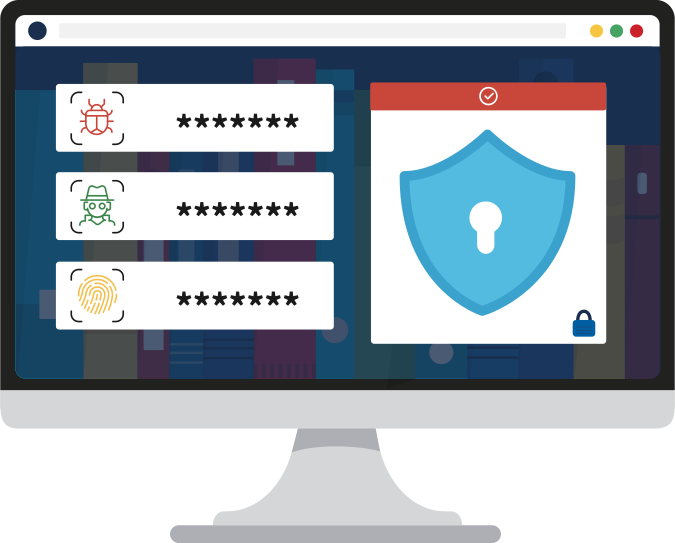
Understanding the Basics of Cybersecurity: Protecting Your Digital Life
In today's digital age, understanding the basics of cybersecurity is crucial for safeguarding your online presence. Cybersecurity involves the practice of protecting computers, servers, mobile devices, and networks from malicious attacks. With the rise in cyber threats such as phishing, malware, and ransomware, being informed about these risks is vital. According to the Cybersecurity Division at Cisco, it has never been more important to implement protective measures for your digital life.
To start building your cybersecurity knowledge, consider implementing the following strategies:
- Utilize Strong Passwords: Create complex passwords that combine letters, numbers, and symbols.
- Enable Two-Factor Authentication: Add an extra layer of security by requiring a second form of verification.
- Stay Informed: Regularly update your software and keep abreast of the latest cybersecurity trends.
For more in-depth guidance on cybersecurity, check out resources from the Australian Cyber Security Centre.
How Does Cybersecurity Work? Unveiling the Invisible Shield
Cybersecurity is an intricate system designed to protect computers, networks, and data from unauthorized access, breaches, and digital threats. The foundation of cybersecurity relies on a combination of technologies, processes, and practices aimed at safeguarding sensitive information. To understand how this invisible shield operates, it's essential to recognize the various components that play a vital role, which include firewalls, intrusion detection systems, and encryption measures. For a more detailed breakdown of these components, you can visit Cisco's Guide to Cybersecurity.
Furthermore, cybersecurity employs multiple layers of defense to ensure comprehensive protection against evolving threats. This involves continuous monitoring and updating of security measures to adapt to new vulnerabilities. Organizations often deploy NIST's Cybersecurity Framework, which outlines best practices for managing cybersecurity risks. By implementing these strategies, companies not only enhance their security posture but also cultivate a culture of awareness among employees, recognizing that human behavior can significantly impact overall security. In this digital age, understanding how cybersecurity works is essential for both individuals and organizations to navigate the complexities of the online world safely.
Is Your Data Safe? Common Cybersecurity Myths Debunked
In today's digital age, many people hold outdated beliefs about their online safety. One prevalent myth is that cybersecurity is solely the responsibility of large corporations. However, personal devices are often targeted just as much as corporate systems. According to the Cybersecurity and Infrastructure Security Agency, individuals must actively participate in protecting their data by using strong passwords, enabling two-factor authentication, and regularly updating software.
Another common misconception is that antivirus software provides complete protection against cyber threats. While programs like these are essential for detecting and removing malware, they cannot guarantee total security. As noted by Kaspersky, cybercriminals are continually evolving their techniques, which means that relying solely on antivirus solutions can leave your data vulnerable. A comprehensive approach that includes awareness of phishing scams and safe browsing practices is crucial for robust cybersecurity.